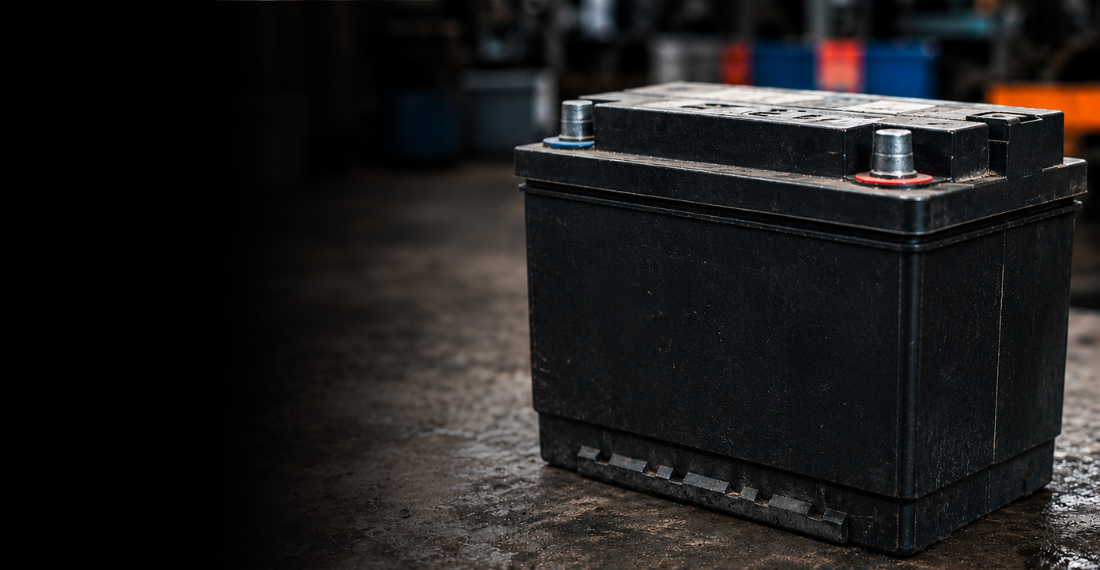
A lead-acid battery occupies an unusual commercial position at any UK scrap weighbridge. It is among the most valuable per-unit items generated by a garage, MOT centre, vehicle dismantler, marine yard, or industrial maintenance operation. It is also, simultaneously, a Class 8 corrosive hazardous waste under international dangerous goods regulations, governed by the Hazardous Waste Regulations 2005, the UK Battery Regulations 2009, the carriage of dangerous goods regime (ADR), the Environmental Protection Act 1990 Duty of Care, and the broader compliance framework for hazardous waste recycling. [1][2][3]
Over many years of running metals and hazardous-waste operations across the UK, my consistent observation is that the regulatory framework for lead-acid batteries is genuinely well-designed: it allows valuable, recyclable lead, polypropylene and sulphuric acid to flow back into productive use through legitimate channels, while preventing the safety and environmental disasters that occur when batteries are handled by people who do not understand what they are dealing with. The framework only works if the people in the chain (the seller, the carrier, the receiver) understand and meet their obligations.
This article explains what lead-acid batteries are, the safety hazards each type poses, the legal transport framework you must comply with to move them lawfully from collection point to recycler, the difference between lead-acid (which Dunmow Group accepts) and lithium-ion (which we do not, for reasons I will set out), the Scrap Metal Dealers Act 2013, and how garages, MOT centres, vehicle dismantlers, fleet operators, marine yards, industrial maintenance teams and DIY car maintainers across Essex can recover full value while remaining fully compliant.
The audience for this piece is the trade community handling vehicle and industrial batteries on a continuous basis, but the same operational framework applies to the householder with a single car battery from a DIY change. Same regulations, same handling principles, same routes.
Lead-acid batteries are electrochemical storage devices built around a stack of lead plates immersed in dilute sulphuric acid electrolyte. They have powered vehicles, marine craft, industrial equipment, and standby and uninterruptible power systems since the late nineteenth century, and they remain the dominant battery chemistry for starter, lighting and ignition (SLI) applications in cars, vans, trucks, motorbikes, agricultural vehicles, marine vessels, leisure craft, and industrial equipment.
A typical 12-volt vehicle battery weighs 14 to 25 kg and contains approximately 60% lead by weight (lead plates, terminals, and lead-oxide active material), 25% sulphuric acid electrolyte, and 15% polypropylene case material, plus minor components (separators, connectors). All three primary fractions are recyclable: the lead is sent to secondary lead smelters and used in new battery production; the sulphuric acid is neutralised or recovered for industrial use; and the polypropylene is recycled into new battery cases or other plastic products. The recycling rate for lead-acid batteries in the UK exceeds 99%, one of the highest closed-loop recycling rates of any waste stream. [4]
UK lead-acid batteries fall into four main categories.
All four categories are recyclable via Dunmow Group’s hazardous-waste-licensed weighbridge, subject to the transport and handling rules set out in this article.
The hazardous classification of a lead-acid battery stems from three properties: the sulphuric acid electrolyte (corrosive and hazardous to humans and the environment), the lead content (toxic, with cumulative environmental and human health impacts), and the stored electrical energy (short-circuit and fire risk if mishandled). [6]
Under the Hazardous Waste (England and Wales) Regulations 2005, lead-acid batteries fall under the European Waste Catalogue (EWC) code 16 06 01 (lead batteries) and are classified as hazardous waste. This means the entire item (battery, casing, electrolyte and contents) is treated as hazardous waste regardless of condition, charge state, or quantity. There is no minimum threshold for hazardous battery handling in England; a single car battery from a domestic DIY car repair falls under the same hazardous waste framework as a 40-foot container of decommissioned industrial batteries from a data centre. [1][7]
The practical effect on the supply chain is that lead-acid batteries can be moved only between parties who are properly authorised, recorded on consignment notes (or domestic waste equivalent for very small householder quantities), and processed at sites licensed to receive them under the Environmental Permitting Regulations. Each link in the chain has obligations, and breach carries criminal penalties under the Environmental Protection Act 1990 and the Hazardous Waste Regulations.
For a garage, MOT centre, vehicle dismantler, or industrial maintenance operation, the compliance picture is routine professional handling: hazardous waste consignment notes, a registered waste carrier, transport in compliance with ADR (with the Special Provision 598 derogation discussed below), and delivery to a permitted receiving site. None of this is exotic; all of it is what licensed operators do every day. The framework only feels heavy when you have not done it before.
Lead-acid batteries are safe to handle when handled correctly. They are unforgiving when not. The four primary hazards every operator should understand:
The electrolyte in a flooded lead-acid battery is a 30-40% sulphuric acid solution. Direct skin contact causes severe chemical burns; eye contact can cause permanent blindness; ingestion causes severe internal injury and is potentially fatal. Even residual acid on the outside of a battery casing (from spillage, venting or overflow) is hazardous on skin contact. PPE for handling flooded lead-acid batteries is non-negotiable: acid-resistant gloves, eye protection (a face shield is preferred for filling and topping-up operations), acid-resistant apron or overalls, and an on-site eye-wash facility. [6]
Environmental contamination from spilled electrolyte is a serious regulatory issue. A lead-acid battery dropped or damaged on a yard floor releases acid that must be contained, neutralised (typically with sodium bicarbonate or a proprietary acid neutraliser), absorbed and disposed of as hazardous waste. Uncontained spillage entering drains, watercourses or soil triggers Environment Agency reporting obligations and potential enforcement action.
VRLA (gel and AGM) batteries are inherently safer in this respect because the electrolyte is immobilised. However, a damaged VRLA battery can still release acid through cracked casings or vented gel, and the hazard profile is reduced rather than eliminated.
During charging, lead-acid batteries produce hydrogen gas at the negative plate and oxygen at the positive plate. Hydrogen is highly flammable, and in confined spaces, a battery charging area can accumulate hydrogen to explosive concentrations (the lower explosive limit is 4% hydrogen in air). Battery charging rooms in industrial settings require dedicated ventilation, control of ignition sources, and, in some cases, hydrogen detection.
For the scrap battery operator, the hydrogen issue is most relevant for damaged batteries (where internal short-circuits can cause ongoing chemical activity and gas generation even when not charging) and for batteries in storage if the room is poorly ventilated. Dunmow Group’s battery storage at our Chelmsford metals facility operates under hazardous waste storage protocols that include ventilation, separation of damaged from intact units, and segregation from ignition sources.
A charged lead-acid battery stores substantial electrical energy. A short circuit across the terminals (caused by metal tools, swarf, or contact with another battery’s terminals) can deliver several hundred amps in a fraction of a second, generating enough heat to melt metal in contact with the terminals, ignite nearby combustible materials, or trigger thermal runaway. Short-circuit fires from improperly stored or transported lead-acid batteries are a recurring cause of incidents at scrapyards and waste facilities in the UK.
Mitigation is straightforward in principle: terminals are covered (using purpose-made terminal covers, electrical tape, or the original packaging), batteries are stacked upright on pallets to prevent terminal-to-terminal contact, conductive objects (tools, swarf, metal containers) are kept away from stored batteries, and damaged units are isolated rather than mixed with intact stock.
If a battery is dropped, struck, crushed, or shows physical damage to the casing, the response is the same: isolate it immediately, contain any acid release with a neutraliser, do not attempt to transport it as a standard lead-acid battery, and contact our team for routing guidance. A damaged battery may require specialist hazardous-waste packaging (UN-approved containment) and dedicated dispatch to a permitted processor capable of handling damaged hazardous goods. Attempting to push a damaged battery through a standard collection compounds the original incident and creates regulatory exposure for the seller.
This is the section of the article that most readers will not have seen clearly explained elsewhere. The transport of lead-acid batteries from the collection point to the recycler falls under the International Agreement Concerning the International Carriage of Dangerous Goods by Road (ADR), which has been transposed into UK domestic law as the Carriage of Dangerous Goods and Use of Transportable Pressure Equipment Regulations 2009. [5][8]
For ADR purposes, lead-acid batteries are classified as:
ADR includes Special Provision 598, which exempts new and used lead-acid batteries from the full ADR carriage requirements (placarding, transport documentation, driver qualifications, etc.) if four conditions are met:
When all four conditions are met, the load is not subject to ADR placarding, transport documents, the ADR-trained driver requirement, or other dangerous goods carriage obligations. This derogation enables the UK’s lead-acid battery recycling chain to operate efficiently: a garage with a pallet of properly stacked, clean, short-circuit-protected batteries can dispatch them to a licensed recycler without an ADR-trained driver or full dangerous goods paperwork. [9]
When the conditions are not met (damaged batteries, acid contamination on the exterior, loose, unprotected stacking, or lack of short-circuit protection), the full ADR regime applies, and non-compliant carriage is a criminal offence under the carriage regulations. [8]
Separately from ADR carriage rules, the Hazardous Waste (England and Wales) Regulations 2005 require that any movement of hazardous waste (including lead-acid batteries) be accompanied by a Hazardous Waste Consignment Note, a tracked, multi-part document recording the producer, carrier, consignee, EWC code, quantity, and disposal or recovery operation code. The consignment note forms the regulatory paper trail proving the waste moved from a legitimate producer, via a registered carrier, to a permitted receiving site. Copies are retained by all parties for three years and are available for Environment Agency inspection. [1][7]
For very small householder quantities (a single car battery from a DIY change), the consignment-note requirement is relaxed in practice under the domestic waste exemption, but the householder still has a Duty of Care to ensure the battery is taken to a legitimate receiving site. The Dunmow Group weighbridge handles the regulatory paperwork; the householder simply brings the battery in and accepts the settlement.
The waste carrier transporting the batteries must be a registered upper-tier waste carrier with the Environment Agency. The receiving site (the scrap yard or specialist battery recycler) must hold an Environmental Permit or a registered exemption authorising the receipt of hazardous waste under EWC 16 06 01. Dunmow Group holds the relevant permits and exemptions across our three Essex facilities, with the metals weighbridge at Chelmsford handling the volume of vehicle and industrial battery flow. [10]
Under Section 34 of the Environmental Protection Act 1990, the producer of hazardous waste (the garage, MOT centre, vehicle dismantler, fleet operator, marine yard) has a continuing Duty of Care to ensure the waste is handled lawfully throughout the chain. This means: verify that the carrier is registered, verify that the receiving site is permitted, retain the consignment note, and act if anything along the chain appears to be wrong. [11]
In practical terms, this works seamlessly when the producer deals with a licensed, permitted scrap operator under a trade account. The trade account flow comprises one weighbridge transaction, one consignment note, one verified payment, and one audit trail. The complexity of the regulatory framework is invisible to the producer because the operator carries it. Producers get into trouble when they use unlicensed carriers, cash buyers, or operators without permits, which collapses the chain and exposes the producer to enforcement action.
This is the section that needs the most attention from every garage, MOT centre, vehicle dismantler, fleet operator and householder reading this article. Lead-acid and lithium-ion are entirely different battery chemistries with distinct hazard profiles and disposal routes. They must never be mixed in the same waste stream.
Lithium-ion (Li-ion) batteries use lithium-based compounds rather than lead-acid chemistry. They are found in mobile phones, laptops, power tools, e-cigarettes/vapes, electric toothbrushes, e-bikes, e-scooters, electric vehicle traction packs, energy storage systems, and a rapidly expanding range of household electronic devices.
When damaged, crushed, punctured, exposed to liquids, or short-circuited, lithium-ion batteries can enter thermal runaway: an exothermic chain reaction in which the battery’s stored energy rapidly converts to heat, generating temperatures over 600°C, igniting the electrolyte, releasing toxic gases, and producing a fire that is extremely difficult to extinguish with conventional methods. A lithium-ion thermal runaway can propagate to adjacent batteries, ignite surrounding materials, and burn for hours or days. [12]
The UK waste industry is in the midst of an acknowledged crisis over this issue. The Environmental Services Association (ESA) has recorded more than 1,200 battery-related fires in UK waste facilities per year (a 71% increase), with lithium-ion batteries identified as the cause of nearly half of all UK waste fires. The estimated annual cost to the UK waste sector now exceeds £1 billion, covering infrastructure damage, business interruption, insurance and emergency response. In January 2025, the EMR scrapyard at Cross Green, Leeds, suffered a significant fire attributed to lithium-ion batteries, with eight fire engines attending overnight. [12][13][14]
Given that risk profile, Dunmow Group does not accept lithium-ion batteries at our metals weighbridges. Loose lithium-ion cells, mobile phone, laptop, power tool, e-bike, and e-scooter batteries, vapes containing lithium-ion cells, and electric vehicle traction packs are outside our scope. This protects our staff, our facilities, our other customers’ material, and the integrity of our hazardous-waste handling chain.
When a customer arrives at our weighbridge with what they describe as “batteries” and the load contains lithium-ion items mixed with lead-acid, the entire load is rejected pending segregation. This is not bureaucratic; it is the operational reality of a £1 billion-a-year industry safety crisis.
Lithium-ion batteries should be routed through:
If you have an EV traction battery to dispose of, contact the vehicle manufacturer’s end-of-life recycling partner directly. If you have loose lithium-ion cells, take them to your local HWRC. Never place a lithium-ion battery in a lead-acid stream, a metals skip, a general waste skip, or a kerbside recycling bin.
For completeness:
The key principle, repeated for emphasis: lead-acid batteries are recyclable via Dunmow Group; lithium-ion and other rechargeable chemistries are not. If you are unsure of a battery's chemistry, call my team before loading it onto a vehicle.
For trade operators handling continuous battery volumes, the operational solution is segregation at source by battery chemistry:
For domestic and DIY customers replacing a single car battery as part of home maintenance, the process is simpler: bring it to any Dunmow weighbridge during opening hours, with the battery upright, terminals covered or taped, and in a tray or container to catch any acid drip. ID and proof of address are standard for first-time domestic sellers.
Even sellers who believe they are presenting a clean lead-acid load often lose value to contamination:
Innovation in our processes, from hazardous-waste-licensed receiving bays at our Chelmsford metals facility to dedicated battery storage, segregated handling and full consignment-note paperwork, exists so that customers see the value of clean battery presentation reflected in their settlement.
Every legitimate lead-acid battery transaction in England and Wales is governed by the Scrap Metal Dealers Act 2013 (SMDA 2013) and the hazardous waste regime. [15][16]
Four core SMDA requirements apply to each legitimate battery transaction:
Battery theft is a persistent UK problem, driven by the lead content. Vehicles parked at MOT centres, garages and vehicle dismantler yards are frequent targets for battery theft, particularly overnight; high-value traction batteries from forklift fleets and standby telecoms installations are organised-theft targets. For weighbridge operators at Dunmow Group, the SMDA verification process protects both legitimate sellers and the community.
At a properly run facility, the process is the same every time. If a buyer skips a step, it is a signal that something is wrong.
For trade accounts with continuous battery flow, the consignment-note process is integrated with the weighbridge system, and the producer’s regulatory paperwork is generated automatically as part of the transaction. No separate administration; one transaction, full compliance.
For garages, MOT centres, vehicle dismantlers (operating as Authorised Treatment Facilities under the End-of-Life Vehicle Regulations), fleet operators, marine yards, industrial maintenance teams and battery distributors that generate lead-acid batteries continuously, a trade account is the operational solution. A Dunmow Group trade account offers:
This is what running a tight ship looks like on the customer side: fast, easy, reliable, and fully compliant with every transaction. The producer focuses on their business; we carry the hazardous-waste regulatory burden.
We operate three scrap metal weighbridge facilities across Essex (Chelmsford, Colchester/Brightlingsea, and Clacton), accepting all categories of ferrous and non-ferrous metal. Lead-acid battery reception is licensed as hazardous waste at our Chelmsford metals facility, with the relevant Environmental Permitting authorisation and ISO compliance for hazardous waste handling. [20]
Same-day electronic payment is the operational standard we hold ourselves to. Do what we say. It is the first of our three customer commitments, and on the battery weighbridge, it means a clear ticket, an accurate weight, a fair price, full consignment-note paperwork, and payment processed before the seller leaves the site.
For trade accounts with continuous battery output, we provide scheduled collections, dedicated battery containers and integrated consignment-note documentation. For domestic and DIY customers with one or two batteries, simply turn up at any of our three sites during opening hours with valid ID and proof of address.
Our five core values, Passion, Innovation, Trust, Community, Hard Work (PITCH), are how we run the hazardous-waste metals operation, not a poster on the wall.
Choosing Dunmow Group means choosing a partner that is safe and compliant, delivers great value, and makes the entire lead-acid battery recycling process fast and easy for trade and domestic sellers alike. We hold ourselves to three operational drivers for every weighbridge ticket.
Lead-acid batteries are valuable recyclable hazardous waste with the highest closed-loop recycling rate of any common UK waste stream (over 99% recovery). They are also Class 8 corrosive hazardous waste under international dangerous-goods regulations and are governed by a comprehensive UK regulatory framework covering hazardous waste, battery producer responsibility, carriage of dangerous goods, scrap metal dealing, and the Duty of Care. The framework only works when the people in the chain understand and meet their obligations.
For trade operators, the operational answer is a trade account with a properly licensed, permitted scrap operator. The producer focuses on their business; the operator handles the consignment-note paperwork, the ADR compliance check (typically via Special Provision 598), the segregation and storage standards, and routing to permitted secondary lead smelters. For domestic and DIY customers, the operational answer is to bring the battery to a licensed weighbridge during opening hours, with ID and proof of address. The framework is invisible to the customer because the operator carries it.
The critical distinction every operator must understand is between lead-acid (recyclable through Dunmow Group) and lithium-ion (not accepted; dedicated routes include manufacturer take-back, specialist recyclers, HWRCs, or producer-funded battery collection schemes). The UK is in the middle of a £1-billion-a-year scrap-yard fire crisis driven by lithium-ion batteries entering the wrong waste streams; our policy on lithium-ion is designed to protect everyone, including the customers handing in their lead-acid stock alongside.
Bring your lead-acid batteries to Dunmow Group at Chelmsford, Colchester or Clacton and weigh in with confidence. For trade operators with continuous battery output, open a trade account, and we will set it up to suit your operation.
Chelmsford: 01245 466646 | Clacton: 01255 360031 | Colchester: 01206 307070 | dunmowgroup.com | WhatsApp: 07902 802802
[1] Hazardous Waste (England and Wales) Regulations 2005 | legislation.gov.uk. https://www.legislation.gov.uk/uksi/2005/894/contents/made
[2] Waste Batteries and Accumulators Regulations 2009 (UK Battery Regulations) | legislation.gov.uk. https://www.legislation.gov.uk/uksi/2009/890/contents/made
[3] Environmental Protection Act 1990 | legislation.gov.uk. The overarching UK waste regulation, including the Duty of Care under Section 34. https://www.legislation.gov.uk/ukpga/1990/43/contents
[4] International Lead Association and Battery Council International: Lead-acid battery recycling rate data. UK and global figures consistently report >99% closed-loop recycling rates for lead-acid batteries. https://www.ila-lead.org
[5] ADR 2025 (European Agreement Concerning the International Carriage of Dangerous Goods by Road), UN classifications: UN2794 (Batteries, wet, filled with acid), UN2800 (Batteries, wet, non-spillable), Class 8 Corrosive. https://unece.org/transport/dangerous-goods
[6] Battery Council International / Eurobat: Safe Handling Guidelines for Lead-Acid Batteries, including PPE, hydrogen ventilation, acid neutralisation and short-circuit prevention. https://eurobat.org
[7] Environment Agency / GOV.UK: Hazardous Waste guidance and consignment note process for waste producers, carriers and consignees. https://www.gov.uk/dispose-hazardous-waste
[8] Carriage of Dangerous Goods and Use of Transportable Pressure Equipment Regulations 2009 | legislation.gov.uk. UK transposition of ADR. https://www.legislation.gov.uk/uksi/2009/1348/contents/made
[9] ADR Special Provision 598 derogation for new and used lead-acid batteries. Reference: ADR 2025, Section 3.3 Special Provisions.
[10] Environment Agency: Public Register of Environmental Permits and Registered Exemptions. https://environment.data.gov.uk/public-register/view/index
[11] GOV.UK: Waste Duty of Care code of practice and Section 34 Environmental Protection Act 1990 guidance. https://www.gov.uk/government/publications/waste-duty-of-care-code-of-practice
[12] Environmental Services Association (ESA): Battery Fires Policy Briefing, September 2025 (1,200+ UK waste fires per year from batteries, £1 billion annual cost, 71% increase). https://esauk.org/2025/09/15/esa-publishes-battery-fire-policy-briefing-calling-for-urgent-reform/
[13] Resource.co: Battery fires in UK waste facilities surge 71 per cent to over 1,200 incidents a year (September 2025). https://resource.co/article/battery-fires-uk-waste-facilities-surge-71-cent-over-1200-incidents-year
[14] letsrecycle.com: Lithium-ion battery suspected cause of EMR Leeds fire, January 2025. https://www.letsrecycle.com/news/lithium-ion-battery-suspected-cause-of-emr-leeds-fire/
[15] BBC News: Cable theft delays on railways fall sharply (80% reduction following SMDA 2013, illustrating broader Act effectiveness). https://www.bbc.co.uk/news/uk-29109733
[16] Scrap Metal Dealers Act 2013 | legislation.gov.uk. https://www.legislation.gov.uk/ukpga/2013/10/contents
[17] Dunmow Group: Certifications & Permits. https://www.dunmowgroup.com/about-us/documents/
[18] Home Office Supplementary Guidance: Cashless payment (Section 12) and identity verification under SMDA 2013. https://www.gov.uk/government/publications/scrap-metal-dealers-act-2013-supplementary-guidance/scrap-metal-dealers-act-2013-supplementary-guidance-accessible
[19] Dunmow Group: ISO 9001, ISO 14001, ISO 45001 accreditations. https://www.dunmowgroup.com/about-us/documents/
[20] Dunmow Group: Scrap Metal Recycling Essex. https://www.dunmowgroup.com/scrap-metal-essex/
© Dunmow Group 2026 | Dunmow House, Regiment Business Park, Eagle Way, Chelmsford, Essex CM3 3FY | dunmowgroup.com | 01245 466646
These Stories on Scrap Metal
-1.png)

Dunmow House
Regiment Business Park
Eagle Way
Chelmsford, Essex, CM3 3FY
Call us: 01245 466646
Gorse Lane Industrial Estate
Stephenson Road
Clacton-On-Sea
CO15 4XA
Call us: 01255 360031
Dunmow House
Regiment Business Park
Eagle Way
Chelmsford, CM3 3FY
Call us: 01245 466646
Gorse Lane Industrial Estate
Stephenson Road
Clacton-On-Sea
CO15 4XA
Call us: 01255 360031
Morses Lane
Brightlingsea
Colchester
CO7 0SD
Call us: 01206 307070
Copyright © 2025 Dunmow Skips Ltd T/A Dunmow Group. All Rights Reserved.


No Comments Yet
Let us know what you think