.png)
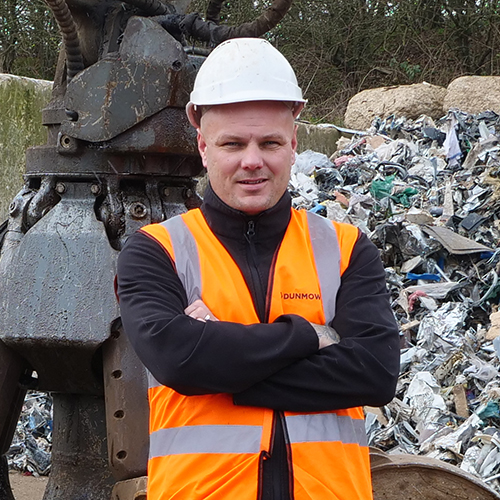
Every electrician, plumber, M&E contractor, demolition firm and house clearer who has ever generated copper cable has faced the same question. Strip it and sell the recovered copper as bright wire at the top of the market, or sell it whole as insulated cable, with the yard pricing it on assumed recovery. The numbers point in different directions depending on what you are holding, how much of it you have, and what your time is worth.
This article is for both ends of that spectrum. It covers trade sellers generating cable in volume from strip-outs, demolitions, refurbishments and rewires, and domestic sellers turning up at the weighbridge with a coil of household twin and earth or a length of armoured. We also explain how our own metals operation processes low-grade cable into bright wire, because customer transparency on grading is how we earn the trade.
What Cable Stripping Actually Means
Stripping is the mechanical removal of insulation, sheathing and jacketing from copper cable to recover the bare copper conductor. Done well, it converts low-grade insulated cable (ISRI: Druid) into the premium bright wire grade (ISRI: Barley), thereby unlocking the price difference between them.
The principle is simple. Insulated cable is priced based on a recovery rate, which is the percentage of the cable’s gross weight that is recoverable as copper. The remainder comprises plastic, rubber, PVC, paper tape, steel armouring or jute. The yard pays for the copper content, not the insulation. [1] By contrast, bright wire is priced at the full LME-linked rate because it requires no further processing before going to the refiner.
Stripping is therefore a value-recovery exercise. The seller is paid for the difference between the assumed recovery rate the yard would apply to insulated cable and the actual weight of clean copper that can be produced by stripping it themselves. Whether that is worth doing depends entirely on the cable.
Recovery Rates: Why Cable Type Decides the Answer
Not all cables yield the same percentage of copper. Recovery rates vary enormously with cable construction, conductor size and insulation type. Knowing the typical ranges is the foundation of the stripping decision. [1][2]
A yard typically applies a standard recovery assumption when settling insulated cable (often around 45% for mixed insulated wire, higher for known heavy industrial cable, and lower for data and alarm). [3] Knowing the actual recovery rate for your cable is what lets you decide whether the yard’s assumption is fair, generous or punitive for your particular load.
The Stripping Decision: Six Variables That Decide
For trade sellers, the question is rarely whether to strip, but how far to go. Six practical variables determine the answer.
|
1. Cable size and recovery rate. Heavy single-core industrial cable at 80% recovery is high-yield, high-margin work. Domestic T&E at 55% is borderline. Cat5 at 25% is almost always uneconomic. 2. Volume. Stripping one coil manually is not worth the labour. Stripping a skip of strip-out cable from a commercial refurbishment is a different matter entirely. The grade premium scales linearly with volume; the labour overhead does not. 3. Live copper price. When copper trades above $10,000 per tonne, the price spread between insulated and bright wire widens, and stripping pays back across more cable sizes. The September 2025 record price of $10,300 per tonne pushed the calculation in favour of more cable types than for years. [4] 4. Your time and labour cost. A self-employed electrician stripping cable in the evening is using time that could be spent elsewhere. A commercial operation with downtime crews or apprentices on quieter days is using time that would otherwise be unproductive. The economics are not the same. 5. Equipment. Mechanical strippers and granulators recover copper far faster than manual stripping. For regular operators, the equipment changes the maths. For once-a-quarter sellers, it does not. 6. Health, safety and legal compliance. Burning cable to recover copper is illegal in the UK under environmental regulations governing the open burning of waste, and reputable yards will refuse burnt copper outright. Knife stripping carries cut and laceration risks; mechanical strippers carry pinch and entanglement risks. Where stripping is carried out, it must be done safely and lawfully. [5] |
Rule of thumb for trade customers: strip heavy industrial cable and medium-section power cable; sell domestic T&E whole unless you are at significant volume; never strip data or alarm cable. Recover the value where the maths supports it; let us recover the value where it does not.
When Selling Whole Is the Right Call
Stripping is not always the right answer. Bringing the cable in whole and letting us strip it makes more sense when:
How Dunmow Group Processes Low Grade Cable into Bright Wire
Transparency on these matters. When a customer sells us insulated cable, we do not simply pass it on. Our metals operation is set up to recover copper from low-grade cable and grade it back up to bright wire (Barley) for sale to refiners. That is part of how we add value and how we are able to pay competitive rates for insulated cable in the first place.
The process at our Chelmsford metals facility runs in three stages: incoming cable is weighed, graded by type and segregated into the relevant processing stream; mechanical stripping and granulation recover copper to Barley (bare bright) specification; and the recovered bright wire is consolidated and sold to UK and European copper refiners under ISRI/ReMA specifications, where it enters the cathode refining process that produces 99.99% pure copper used in new manufacturing. The separated insulation is recycled as plastic waste through licensed downstream partners.
The reason we explain this openly is straightforward. When a seller brings us low-grade cable, we do not make margin from misgrading their load. We make margin from the processing capability we have invested in. The two are different, and the difference matters for the trust we want our trade and domestic customers to have in our weighbridge. That investment in processing is the Innovation value made operational, and the discipline of running it well is what lets us offer fair rates on insulated cable and still pay competitively on bright wire.
What Contaminates a Cable Load and Costs You Money
Even sellers who believe they are presenting clean cable often slip on grading. Common contaminants and downgrades:
Innovation in our processes, from segregated weighbridge lanes to live grade ticketing, exists so that customers see the value of clean presentation in their settlement.
The Law: Scrap Metal Dealers Act 2013
Every legitimate copper-cable transaction in England and Wales is governed by the Scrap Metal Dealers Act 2013 (SMDA 2013), which came into force on 1 October 2013 in direct response to a UK copper theft crisis. Within a year, British Transport Police recorded an 80% drop in railway-cable theft incidents and associated delays. [6][7] Copper cable, more than any other material, is the metal that prompted this legislation.
Four core requirements apply to all legitimate cable transactions:
Licensing: every scrap metal dealer must hold a council-issued site licence or collector’s licence. Dunmow Group holds full site licences at each of our three Essex facilities. [7][8]
Cashless payment (Section 12): It is a criminal offence to pay for scrap metal in cash, with no exemptions. Permitted methods are non-transferable (“crossed”) cheques or electronic transfers. If a buyer offers you cash for cable, walk away. [9]
ID verification: dealers must verify identity (UK photocard driving licence or passport, supported by proof of address dated within the previous three months where required) before each transaction. For trade customers on account, verification is completed at account opening. [9]
Record-keeping: every transaction is logged (seller, ID, vehicle registration, material, weight, price, payment method) and records are retained for at least three years for inspection by police or council enforcement officers. [7][9]
Cable poses the highest theft risk of any common scrap material, and police and BTP officers regularly visit scrap yards to inspect records. A traceable transaction with a licensed dealer, on a calibrated weighbridge, with valid ID and a payment audit trail, cannot be challenged later.
How a Cable Weighbridge Transaction Should Work
The Trade Account Advantage for Cable Sellers
For electricians, M&E contractors, demolition firms and rewire specialists who regularly generate cable, a trade account is the operational solution. A Dunmow Group trade account offers:
Pre-verified ID and account details: no repeated verification on each visit.
Monthly statement settlement for all non-ferrous deliveries, eliminating per-visit administration.
Priority weighbridge access at our Chelmsford metals facility.
Roll-on, roll-off (RoRo) containers for high-volume strip-outs, delivered to site and available in 20, 30 and 40 cubic yard capacities. Suitable for commercial fit-outs, MEP refurbishments and full-site demolitions where cable volumes warrant a dedicated container.
Scheduled business collections for premises with continuous cable output (electrical contractors, M&E specialists, and fabricators).
Waste Transfer Notes and ISO-certified documentation are standard and covered by our ISO 9001/14001/45001 accreditations. [10]
This is what running a tight ship looks like on the customer side: fast, easy, reliable, and fully compliant with every transaction.
Dunmow Group: Where Your Cable Becomes Same-Day Cash
We operate three scrap metal weighbridge facilities across Essex (Chelmsford, Colchester/Brightlingsea, and Clacton), accepting all categories of ferrous and non-ferrous metal. Our dedicated metals weighbridge at Chelmsford provides precise, calibrated weighing for every load, with same-day electronic payment to the seller’s nominated account. [11]
That same-day payment is the operational standard we hold ourselves to. Do what we say. It is the first of our three customer commitments, and on the cable weighbridge, it means a clear grade-by-grade ticket, a clean weight, a fair price, and payment processed before the seller leaves the site.
Our Essex Metals Facilities:
For trade customers with active sites, we deliver RoRo containers (20, 30 or 40 cubic yards) directly to site, schedule pickups around your programme, and settle your trade account on monthly terms.
Our Commitment: PITCH in Practice on the Cable Weighbridge
Our five core values, Passion, Innovation, Trust, Community, Hard Work (PITCH), are how we run the metals operation, not a poster on the wall.
Choosing Dunmow Group means choosing a partner that is safe and compliant, delivers great value, and makes the entire ferrous recycling process fast and easy. These are the three operational drivers we hold ourselves to on every single weighbridge ticket.
The Bottom Line
Stripping copper cable is worthwhile when the recovery rate is high, the volume is significant, the live copper price covers labour, and the operation can be carried out safely and lawfully. For heavy industrial and medium-section power cable in volume, stripping is almost always worth it. For domestic T&E, it is marginal, depending on labour costs. For data, alarm and flex cable, it is rarely worth the effort.
What matters in every case is weighing in at a licensed, calibrated, professionally run facility, with valid ID, traceable payment, and a ticket that breaks the load down grade by grade. Where you choose to strip, do so safely. Where you choose to sell whole, sell to a yard with the processing capability to grade your cable accurately and pay you at its true recovery rate. That is what we do at Dunmow Group. Our investment in stripping and granulation is exactly why we can offer fair rates on insulated cable at the weighbridge.
Bring your copper cable to Dunmow Group at Chelmsford, Colchester or Clacton and weigh in with confidence. For site-generated volumes, open a trade account, and we will deliver the container to you.
Call us on 01245 444888 (Chelmsford) | 01255 360031 (Clacton) | 01206 307070 (Colchester - Brightlingsea) | Whatsapp: 07902 802802
References & Citations
[1] Recycled Materials Association (ReMA, formerly ISRI): ISRI Scrap Specifications, non-ferrous (Barley, Berry, Birch, Candy, Cliff, Druid). https://www.isrispecs.org
[2] Industry recovery-rate data for copper cable by cable type (heavy industrial, medium-section power, T&E, armoured, data, flex). Composite reference from BMRA / ReMA member specifications and UK trade practice.
[3] UK scrap yard standard settlement practice for insulated cable based on assumed recovery rates; rates vary by yard, by cable type, and by live copper market.
[4] Security Journal UK: Cable and copper theft on the rise in North-West England (September 2025 record copper price of $10,300 per tonne). https://securityjournaluk.com/cable-copper-theft-rise-north-west-england/
[5] Environment Agency / DEFRA: Open burning of waste and cable burning regulations under the Environmental Permitting (England and Wales) Regulations 2016. https://www.gov.uk/guidance/environmental-permits-for-waste-operations
[6] BBC News: Cable theft delays on railways fall sharply (80% reduction following SMDA 2013). https://www.bbc.co.uk/news/uk-29109733
[7] Scrap Metal Dealers Act 2013 | legislation.gov.uk. https://www.legislation.gov.uk/ukpga/2013/10/contents
[8] Dunmow Group: Certifications & Permits. https://www.dunmowgroup.com/about-us/documents/
[9] Home Office Supplementary Guidance: Cashless payment (Section 12) and identity verification under SMDA 2013. https://www.gov.uk/government/publications/scrap-metal-dealers-act-2013-supplementary-guidance/scrap-metal-dealers-act-2013-supplementary-guidance-accessible
[10] Dunmow Group: ISO 9001, ISO 14001, ISO 45001 accreditations. https://www.dunmowgroup.com/about-us/documents/[11] Dunmow Group: Scrap Metal Recycling Essex. https://www.dunmowgroup.com/scrap-metal-essex/
These Stories on Scrap Metal
Dunmow House
Regiment Business Park
Eagle Way
Chelmsford, Essex, CM3 3FY
Call us: 01245 466646
Gorse Lane Industrial Estate
Stephenson Road
Clacton-On-Sea
CO15 4XA
Call us: 01255 360031
Dunmow House
Regiment Business Park
Eagle Way
Chelmsford, CM3 3FY
Call us: 01245 466646
Gorse Lane Industrial Estate
Stephenson Road
Clacton-On-Sea
CO15 4XA
Call us: 01255 360031
Morses Lane
Brightlingsea
Colchester
CO7 0SD
Call us: 01206 307070
Copyright © 2025 Dunmow Skips Ltd T/A Dunmow Group. All Rights Reserved.


No Comments Yet
Let us know what you think