Every load of ferrous scrap crossing a UK weighbridge is graded before it is priced, and the grade determines the cheque. Most sellers turn up with a mixed load, take the mixed-iron rate, and accept that as the going price. A more deliberate group sorts on site, presents clean grades, and takes home a materially higher figure for the same tonnage.
This article is for both ends of that spectrum. Housebuilders, demolition contractors, site managers, electricians, plumbers and fabricators who generate ferrous scrap in volume; and householders, landlords and house clearers arriving at the weighbridge with a van or trailer. Read on if you have ever wondered why two loads of “iron” can be priced very differently, and whether sorting is worth your time.
What Ferrous Scrap Actually Is
Ferrous scrap is iron-based metal: steel, cast iron, wrought iron, and any alloy in which iron is the dominant constituent. The defining test on the weighbridge is straightforward: a magnet sticks. Non-ferrous metals (copper, aluminium, brass, lead, and stainless steel, in most cases) do not respond to magnets and are priced on entirely different scales. UK ferrous supply comes from demolition arisings, construction offcuts, end-of-life vehicles, white goods, manufacturing turnings, and obsolete plant. Every steel mill and foundry that takes recycled feedstock has a specification for what it will accept and at what price, and that specification is why grades exist.
The UK Ferrous Grading System: Why Grades Matter
Shearing (Grade OA: Plate and Structural): Cut structural and plate arisings, predominantly 6 mm thick or more, in sizes not exceeding 1.50 m x 0.60 m. This is the premium ferrous grade: clean, dense, predictable, and ready for the furnace. [1]
Constructional Steel (Heavy Melt / HMS-type material): Heavier sections, including beams, RSJs, columns, rebar and structural offcuts. In international trade, this overlaps with the Heavy Melting Steel (HMS) 1 and HMS 2 classifications, with HMS 1 reserved for cleaner, non-galvanised heavier sections. [2]
Light Iron (Grade 5C: Loose Old Light Steel): Loose old light steel material, including depolluted white goods, light iron and steel arisings, and thin-gauge steel. Must not include heavy iron, wire ropes, fuel tanks, or tin-coated materials, and must not contain loose dirt or tyres. [1]
Shearing (Grade 5B: Pressed and Sheared Old Light Steel): Pressed or sheared light steel material produced on a press shear, with the same exclusions as 5C. [1]
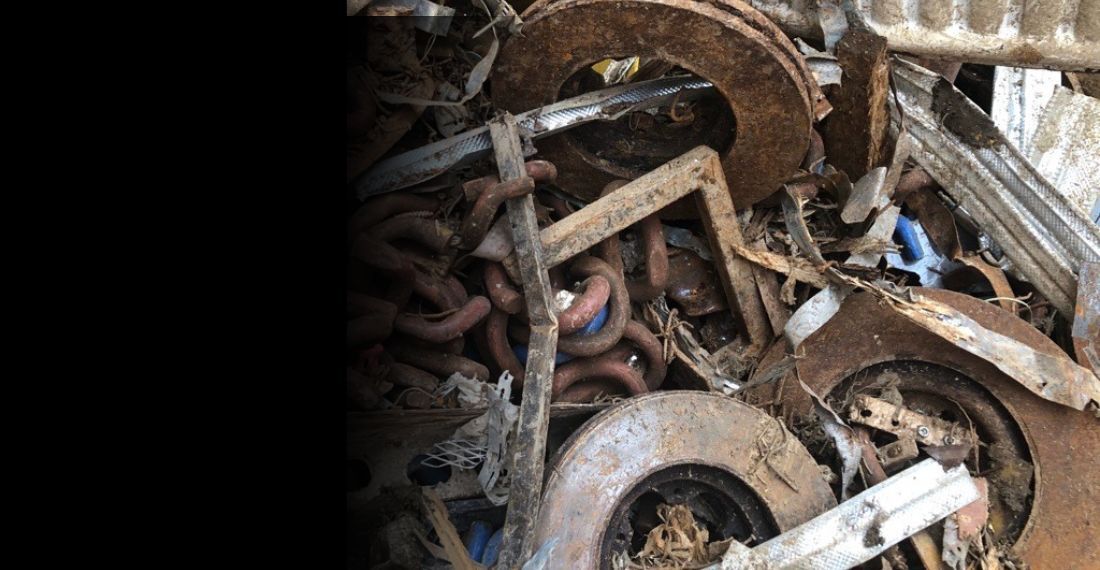
Mixed Iron: Not a BMRA grade in its own right. It is a commercial settlement category for ferrous material that has not been segregated to specification. Mixed iron is downgraded by definition: it is priced on the assumption that some proportion of the load will not meet the highest grade after processing.
Cast Iron: A separate furnace stream covering engine blocks, manhole covers, baths and brake discs. Higher carbon content, brittle, and melts differently from steel. Treated as its own grade.
Turnings and Borings: Swarf from machining operations. Lower in value due to oil contamination and low density. Must be presented dry and uncontaminated.
Why Mixed Iron Pays Less: The Mill’s Perspective
A steel mill or foundry buying ferrous scrap is solving a metallurgical problem. The furnace charge must deliver a known volume of clean iron units at a predictable melt rate, with manageable slag and emissions. Every kilogram of unwanted material in the charge (galvanised coating, copper wiring still attached, plastics, dirt, oil, non-ferrous fasteners, oversized sections) must be removed, burned off, or tolerated. All three options cost money.
When a scrap yard sells to a mill, it sells to that specification. When a seller delivers a mixed load to a scrap yard, the yard has three options: sort it themselves to recover the grade premium (at a labour cost), shred it and accept fragmentiser-grade pricing, or settle the load as mixed iron with the discount priced in. The mixed-iron price is the seller passing the sorting cost back to the yard.
In plain commercial terms: the cleaner and more accurately graded the load, the closer the seller is to the mill price; the more mixed the load, the further they are from it. That is the price gap. It is neither arbitrary nor negotiable. It is a function of what happens downstream.
The Sorting Decision: Is It Worth Your Time?
This is the question every site manager, demolition contractor and house clearer should ask. The answer is rarely “always” or “never”. It depends on five variables.
A reasonable rule of thumb for trade customers: if your scrap volume justifies a roll-on, roll-off (RoRo) container, segregation almost always pays off. For domestic and one-off sellers, mixed iron is the practical settlement category, and the value lies in convenience, speed and same-day payment.
What Contaminates a Load and Costs You Money
Even sellers who believe they are presenting a clean grade often lose value to contamination they have not spotted.
|
The Common Offenders: 1. Non-ferrous attached to ferrous: copper windings still inside an electric motor; brass valves on steel pipework; aluminium trim on steel frames. Strip them and weigh them separately. They are worth far more when weighed separately. 2. Galvanised coatings on heavy material: acceptable in some grades, excluded in others (notably HMS 1 vs HMS 2). Mixing galvanised into a structural load can drag the whole load down. 3. Tin-coated steel is specifically excluded from grades 5B and 5C. Food tins belong to a different category entirely. 4. Wire and wire ropes: excluded from light iron grades 5. Fuel tanks, gas bottles and pressurised vessels: not just a downgrade but a safety hazard. Reputable yards will refuse them unless they are properly decommissioned. 6. Oil, fluids and loose dirt: depollute first. A wet, dirty load loses grade and slows the weighbridge process. 7. Tyres: excluded from all standard ferrous grades. 8. Asbestos, plasterboard, plastics, timber: these belong in a skip, not on a scrap weighbridge. Bringing them in mixed with metal contaminates the entire load and triggers a downgrade or rejection. 9. Innovation in our processes, from segregated weighbridge lanes to live-graded ticketing, exists precisely so that customers see the value of clean presentation reflected in their settlement. |
The Law: Scrap Metal Dealers Act 2013
Every legitimate ferrous transaction in England and Wales is governed by the Scrap Metal Dealers Act 2013 (SMDA 2013), which came into force on 1 October 2013 to combat the £770 million annual cost of metal theft. [3] Sellers and buyers alike need to understand four core requirements.
Licensing. Every scrap metal dealer must hold a council-issued licence: either a site licence (fixed facility) or a collector’s licence (mobile operation). Operating without one is a criminal offence. Dunmow Group holds full site licences for each of our three Essex facilities. [3][4]
Cashless payment is mandatory. Section 12 of the Act makes it a criminal offence for any scrap metal dealer to pay for scrap metal in cash, with no exemptions. Permitted methods are non-transferable (“crossed”) cheques or electronic transfers (BACS, Faster Payments, direct credit, online or mobile banking). Gift cards, vouchers and “cash-equivalent” workarounds are not permitted. [5]
If a buyer offers you cash for ferrous scrap, that buyer is operating illegally, and the seller risks being drawn into a chain that could lead to investigation. Walk away.
ID verification. Dealers must verify the identity of every seller before completing a transaction. Acceptable identification is photographic ID (UK photocard driving licence or passport), supported, where the photo ID does not show the current address, by proof of address dated within the previous three months. For trade customers on account, this verification is established at account opening. [5][6]
Record-keeping. Every transaction must be recorded (seller details, ID, vehicle registration, material description and weight, price paid, payment method) and the records retained for at least three years and made available for inspection by police or council enforcement officers. [3][5]
Why this protects you. A traceable transaction with a licensed dealer, on a calibrated weighbridge, with valid ID and a payment audit trail, cannot be challenged later. Cash deals with unlicensed collectors leave the seller exposed to questions about provenance and value, with no record to support them.
|
How a Weighbridge Transaction Should Work: At a properly run facility, the process is the same every time. It is also a useful benchmark for any seller. If a buyer skips a step, that is your signal that something is wrong. 1. Vehicle weighed in (gross weight). The loaded vehicle drives onto a calibrated weighbridge and is weighed. 2. Identity verified. The seller presents photographic ID and, where required, proof of address. For trade accounts, the account credentials are verified. 3. Material is inspected and graded. A trained weighbridge operator inspects the load and assigns grades. Mixed loads are settled as mixed iron; segregated loads are weighed and priced grade by grade. 4. Material discharged. The load is tipped into the appropriate grade-specific bay. 5. Vehicle weighed out (tare weight). The empty vehicle is reweighed. 6.Net weight calculated. Gross minus tare equals net: the exact tonnage of material delivered. 7. Ticket issued and payment processed. A weighbridge ticket records all transaction details. Payment is processed by electronic transfer, normally on the same day, at our Chelmsford metals facility. This is the audit trail that protects both parties under the SMDA 2013, and it gives the seller confidence that the weight on the ticket is the weight they were paid for. |
The Trade Account Advantage
For contractors and businesses that regularly generate ferrous scrap, a trade account is the operational solution for volume. A Dunmow Group trade account offers:
This is what running a tight ship looks like on the customer side: fast, easy, and reliable, with a single point of contact and clear paperwork for every transaction.
Dunmow Group: Where Your Ferrous Scrap Becomes Same-Day Cash
We operate three scrap metal weighbridge facilities across Essex (Chelmsford, Colchester/Brightlingsea, and Clacton), accepting all categories of ferrous and non-ferrous metal. Our dedicated metals weighbridge at Chelmsford provides precise, calibrated weighing of every load, with same-day electronic payment to the seller’s nominated account. [8]
That same-day payment is the operational standard we hold ourselves to. Do what we say. It is the first of our three customer commitments, and on the metals weighbridge, it means a clear ticket, a clean weight, a fair grade, and payment processed before the seller leaves the site.
Our Essex Metals Facilities:
For trade customers with active sites, we deliver RoRo containers (20, 30 or 40 cubic yards) directly to site, schedule pickups around your programme, and settle your trade account on monthly terms.
Our Commitment: PITCH in Practice on the Weighbridge
Our five core values, Passion, Innovation, Trust, Community, Hard Work (PITCH), are how we run the metals operation, not a poster on the wall.
Choosing Dunmow Group means choosing a partner that is safe and compliant, delivers great value, and makes the entire ferrous recycling process fast and easy. These are the three operational drivers we hold ourselves to on every single weighbridge ticket.
The Bottom Line
Mixed iron fetches less than sorted ferrous scrap because downstream mills pay less for it, and there is no way around that economic reality. Whether sorting is worth your time depends on volume, composition, frequency and your site setup. For trade contractors generating ferrous scrap in volume, segregating into structural, light iron, cast and non-ferrous bins almost always pays back. For domestic and one-off sellers, mixed iron is the practical reality, and the value lies in convenience, speed and same-day payment.
What matters in every case is that you weigh in at a licensed, calibrated, professionally run weighbridge, and that you understand exactly which grade your material has been settled at and why. That is the difference between guessing your scrap price and knowing it.
Bring your ferrous scrap to Dunmow Group at Chelmsford, Colchester or Clacton and weigh in with confidence. For site-generated volumes, open a trade account and we will collect the container from you.
Call us on 01245 444888 (Chelmsford) | 01255 360031 (Clacton) | 01206 307070 (Colchester - Brightlingsea) | Whatsapp: 07902 802802
References & Citations:
[1] British Metals Recycling Association (BMRA): UK Specifications for Metals Recycling for Ferrous Raw Materials used in the Manufacture of Iron and Steel (3rd edition, joint specifications agreed with UK Steel and the Cast Metals Federation). https://www.recyclemetals.org/newsandarticles/updated-ferrous-specification-booklet.html
[2] Heavy Melting Steel (HMS) ISRI / international ferrous classifications: HMS 1 and HMS 2 specifications, density and thickness thresholds for steel mill feedstock.
[3] Scrap Metal Dealers Act 2013 | legislation.gov.uk https://www.legislation.gov.uk/ukpga/2013/10/contents
[4] Home Office: Scrap Metal Dealers Act 2013, Guidance for licensing authorities, dealers, sellers and buyers. https://www.gov.uk/government/publications/scrap-metal-dealers-act-2013-supplementary-guidance
[5] Home Office Supplementary Guidance: Cashless payment requirements (Section 12) and identity verification obligations under SMDA 2013. https://www.gov.uk/government/publications/scrap-metal-dealers-act-2013-supplementary-guidance/scrap-metal-dealers-act-2013-supplementary-guidance-accessible
[6] Environment Agency Public Register: Waste Carriers, Brokers and Dealers. https://environment.agency.gov.uk/public-register/view/index
[7] Dunmow Group: Certifications & Permits, ISO 9001, ISO 14001, ISO 45001. https://www.dunmowgroup.com/about-us/documents/
[8] Dunmow Group: Scrap Metal Recycling Essex. https://www.dunmowgroup.com/scrap-metal-essex/
These Stories on Scrap Metal
-1.png)
Dunmow House
Regiment Business Park
Eagle Way
Chelmsford, Essex, CM3 3FY
Call us: 01245 466646
Gorse Lane Industrial Estate
Stephenson Road
Clacton-On-Sea
CO15 4XA
Call us: 01255 360031
Dunmow House
Regiment Business Park
Eagle Way
Chelmsford, CM3 3FY
Call us: 01245 466646
Gorse Lane Industrial Estate
Stephenson Road
Clacton-On-Sea
CO15 4XA
Call us: 01255 360031
Morses Lane
Brightlingsea
Colchester
CO7 0SD
Call us: 01206 307070
Copyright © 2025 Dunmow Skips Ltd T/A Dunmow Group. All Rights Reserved.


No Comments Yet
Let us know what you think